When “Slim” Isn’t “Schlimm”: A Lesson in Miscommunication in Relationships
Last Friday, we decided to shake things up a bit. Instead of our usual cozy date night at home, we made our way over to our friends’ place here in Germany. These friends feel more like family than anything else, and when we all get together, it’s an instant recipe for laughter, good conversation, and of course, great food. This time, we skipped the endless kitchen prep and went straight for a takeaway dinner—our local Döner Haus, to be exact.
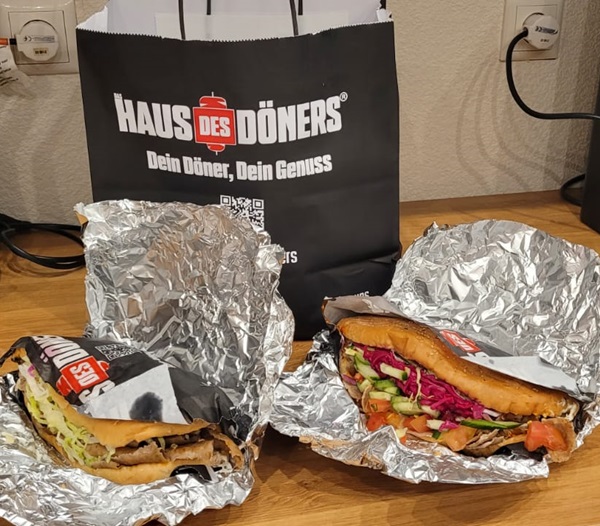
If you’ve read our previous post all about our beloved Döner spot, you know how much we rave about it. After all our hyping it up, our friends were eager to try it for themselves. Let’s just say our high expectations did not disappoint—their grins at first bite said it all. The evening was off to a delicious start, and we barely reached for our phones, too caught up in chatting, joking, and sharing stories.
“Slim” or “Schlimm” 🤔
Now, about those stories. We had a pretty hilarious “Aha!” moment this weekend that perfectly sums up the theme of miscommunication in relationships. Being from South Africa, I speak Afrikaans, and let’s just say Afrikaans and German share some words that sound suspiciously similar. Enter the great “slim” vs. “schlimm” debacle.
In Afrikaans, “slim” means “smart.” If you say “Dit is nie slim nie,” you’re basically telling someone, “That’s not smart,” and not in the nicest way. For two whole years, every time we heard German parents say “Das ist nicht schlimm” (which sounds an awful lot like “slim” to our ears), we assumed they were telling their kids, “That’s not smart!” We honestly thought they were being a bit rude, especially since this phrase popped up when their kids might have fallen or made a small mistake.
Imagine our surprise when we finally learned that “Das ist nicht schlimm” actually means “That’s not so bad” or simply, “It’s okay.” So, while we were busy feeling sorry for the poor kids receiving what we thought was a harsh critique, those kids were actually being comforted. Cue the facepalm and some seriously hearty laughter. 🤣🙈
How we “try” to avoid Miscommunication in Relationships
This tiny misunderstanding made us realize just how easily miscommunication in relationships can sneak into our lives. Whether it’s a linguistic mix-up or something more emotional, relationships can get tangled if we’re not careful about what we say and how we say it. It’s exactly why we value our date nights so much. Life is busy, and it’s far too easy to let truly meaningful conversations slip through the cracks.
Spending that dedicated time together—cooking, sipping on some wine, sharing a plate of Döner—is our way of hitting “pause” on the world around us. We talk, we listen, we ask questions, and we learn more about each other. Just as we learned the difference between “slim” and “schlimm,” we’re constantly learning new ways to understand each other’s words, tones, and intentions.
Of course, this kind of communication mastery doesn’t happen overnight. We’re all works in progress, doing our best to interpret meaning without letting emotions run wild. But every little discovery—even if it’s a funny language misunderstanding—helps us grow closer. It’s these small, quirky lessons that remind us why we make time for each other, and why we cherish nights like these.
Our recent get-together may not have been a traditional “at-home” date night, and we might not have a million pictures to show for it. But what we gained was something so much better—an inside joke, a fun story to tell, and a new appreciation for the subtle art of understanding each other. Miscommunication in relationships isn’t always serious—it can be downright hilarious. And trust me, that’s not so bad at all.
Here are some amazon finds that you might be interested in:
Listen Up or Lose Out: How to Avoid Miscommunication, Improve Relationships, and Get More Done Faster
Authored by communication experts Robert Bolton and Dorothy Grover Bolton, this book emphasizes the importance of active listening. It provides practical steps to enhance listening skills, aiming to reduce conflicts and improve decision-making in both personal and professional settings.
And if you are in the mood to learn German, take look at a new website we started… its still a work in progress 😜